What PP Spunbond Nonwoven Fabric Really Is, and Why It Outlasts Its Reputation
Ryan Wang
Director, International Markets
Polypropylene spunbond nonwoven is one of the most widely used engineered fabrics in the world, and one of the most misunderstood.
It is the material we manufacture at Greatech, and it carries a reputation that is only partly true: that it is a cheap, disposable, single-use fabric.
It can be designed for single use. But that does not mean the material itself is inherently short-lived.
Made with the right raw materials, controlled properly during production, and specified for its operating environment, PP spunbond can remain functional for years. The difference comes down to three things: what goes into the fabric, how it is manufactured, and where it is used.
What PP spunbond actually is
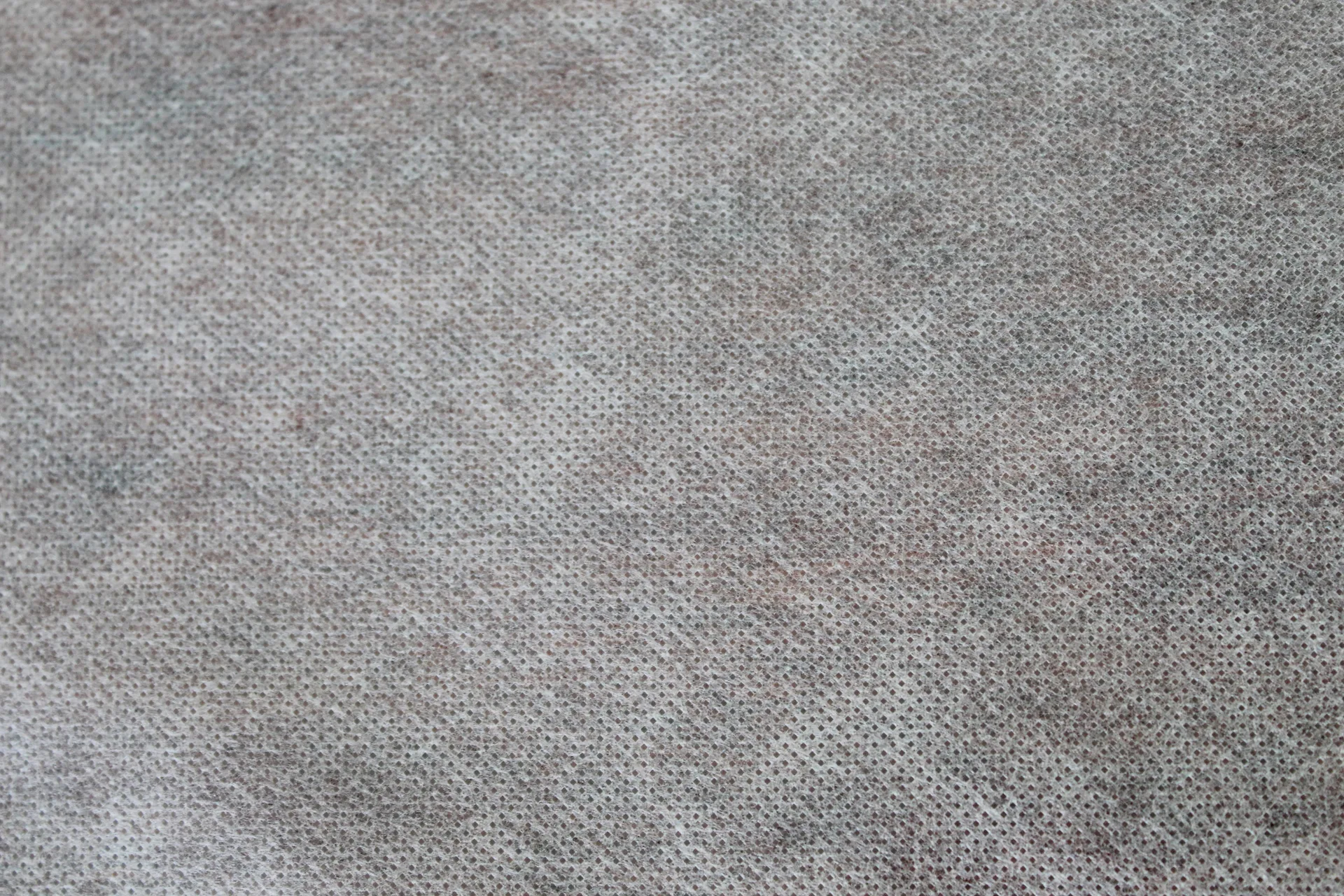
A nonwoven is a fabric made by forming and bonding fibres directly into a web, without first producing yarn and then weaving or knitting it.
Spunbond is a continuous filament nonwoven process well suited to applications that require strength, consistency, and efficient production at scale.
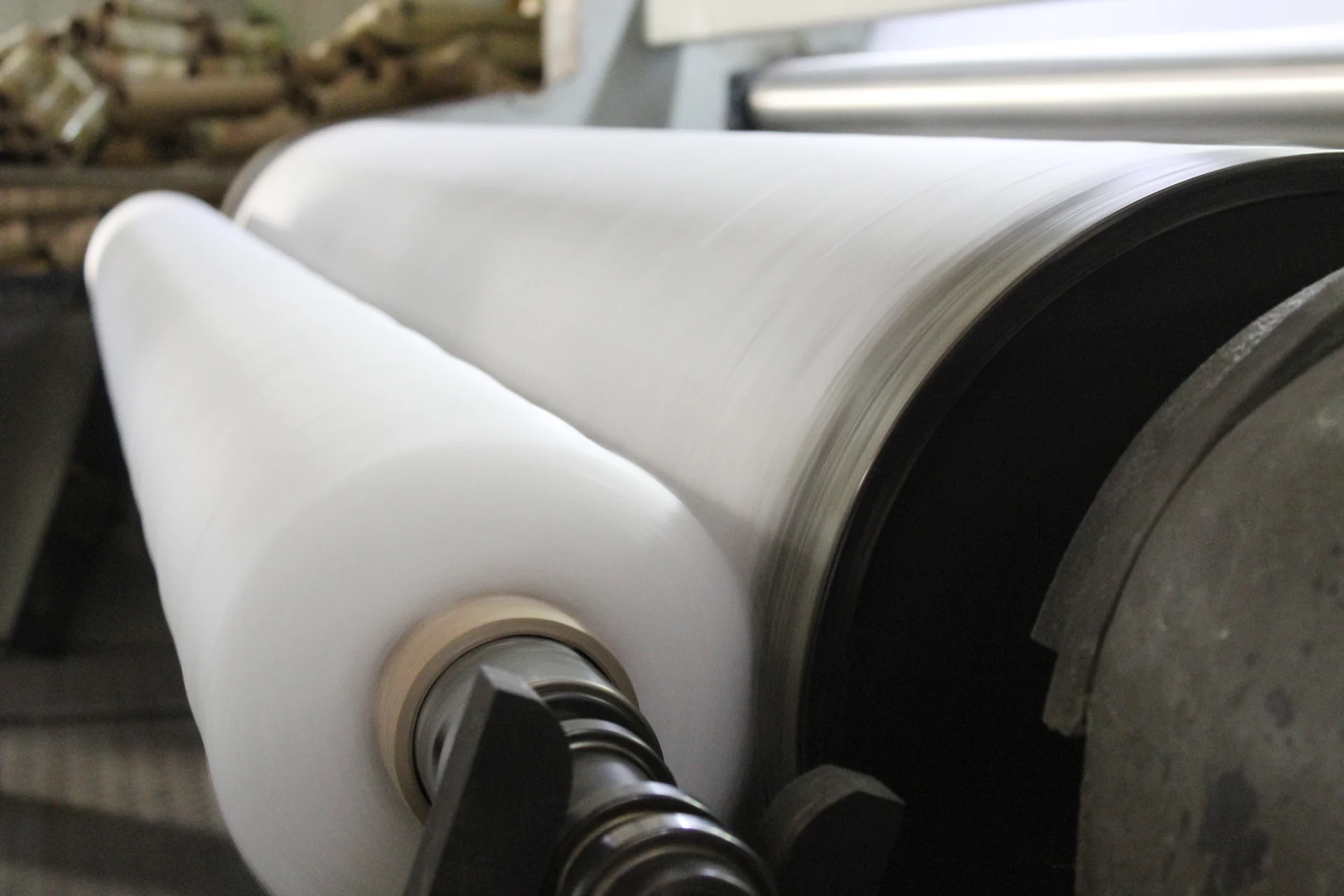
The fabric is produced in one continuous manufacturing line, from polymer pellet to finished roll. Polypropylene resin is melted and extruded through a spinneret to form thousands of fine continuous filaments. Those filaments are drawn and oriented using high-speed air, laid into an even web, and then bonded together under controlled heat and pressure.
There is no yarn and no weaving. In our standard spunbond process, there is also no chemical adhesive holding the structure together. The web is thermally bonded.
That continuous process makes spunbond efficient to manufacture at scale. It is one reason the material appears in high-volume products around the world. It is also one reason people assume it is inherently disposable.
That assumption is wrong.
Why PP spunbond has a disposable reputation
Most consumers encounter nonwoven fabric in masks, hygiene products, shopping bags, protective covers, and other high-volume applications. Many of those products are intentionally designed for short service lives.
Disposability is often a product design decision, not an inherent property of spunbond polypropylene itself.
A lightweight fabric designed for a short-life hygiene application is fundamentally different from a heavier material engineered for furniture, filtration, mattress components, agriculture, packaging, or industrial use.
Even within the same nominal weight, two fabrics can perform differently depending on the formulation, manufacturing conditions, bonding profile, and environment in which they are used.
This is why the words “PP spunbond” alone tell a buyer surprisingly little about how a fabric will perform over time. Several factors determine service life. Three of the most important are material integrity, manufacturing control, and the conditions in which the fabric is expected to work.
What goes into the fabric matters
Not every PP spunbond fabric has the same formulation.
Calcium carbonate filler, externally sourced recycled polymer, post-consumer material, and internal production reclaim are different inputs with different implications. They should not be treated as interchangeable.
Their effect depends on factors including source, loading, cleanliness, dispersion, formulation, prior processing history, and the performance requirements of the final application.
At Greatech, virgin polypropylene resin is our primary feedstock. In normal production, we may reincorporate less than 5% clean internal production reclaim generated from our own freshly manufactured nonwoven. We do not use post-consumer recycled material or externally sourced recycled polymer feedstock in that standard formulation, and we do not intentionally add calcium carbonate filler.
That distinction matters.
Our internal reclaim originates within our own controlled production environment, from material whose source and formulation are known to us. It is different from purchasing external recycled feedstock whose origin, contamination history, formulation, or prior processing history may be less certain.
Relevant ISO terminology also recognises an important distinction between ordinary recycled material and certain forms of rework, regrind, or scrap generated and reclaimed within the same production process. We think that distinction should be explained clearly rather than hidden behind broad claims such as “virgin” or “recycled.”
The point is not that every recycled or filled fabric is poor quality. Different formulations can be appropriate for different applications.
The point is that formulation matters — and buyers should know what they are actually purchasing.
Why formulation can affect durability
A spunbond filament is extremely fine.
Its performance depends on the continuity and integrity of the polymer structure from which it is formed. Changes in resin consistency, contamination, filler loading, dispersion, prior thermal history, and processing stability can affect how consistently those filaments form and perform.
For some applications, this may be of limited consequence. For others — especially where tensile retention, elongation, flexibility, consistency, or longer service life matter — formulation control becomes more important.
Two rolls may both be described as 80 GSM PP spunbond. They may look similar when first unrolled.
The label describes the category. It does not describe the quality of execution.
If the formulation, fibre formation, bonding conditions, and process control are different, the performance of two nominally identical fabrics may not be the same. This is one reason we believe procurement decisions should not be based on GSM and price alone.
How the fabric is manufactured matters too
Good raw material does not automatically guarantee good fabric.
Polypropylene is exposed to heat, pressure, drawing forces, and mechanical stress as it moves from pellet to molten polymer, from molten polymer to filament, and from filament to bonded web. How those stages are controlled affects the finished material.
Filament formation must remain stable. The drawing process must be controlled. The web must be laid with sufficient uniformity. Basis weight must remain within specification. The thermal bonding process must create enough bond integrity without unnecessarily damaging or over-consolidating the web.
Too little bonding can leave a weak structure. Excessive heat or pressure can compromise flexibility, alter mechanical behaviour, and damage the very structure the process is intended to create.
Melt cleanliness matters as well. Spinneret blockage, unstable extrusion, broken filaments, contamination, and poor web formation can create defects and variation that may not always be obvious from a quick visual inspection of the finished roll. A roll may meet its average nominal GSM while still containing local variation that affects performance in downstream converting or in the finished product.
A well-specified polymer can still be turned into inconsistent fabric if the process is poorly controlled. The polymer matters. The process matters too.
Where the fabric is used matters
For polypropylene used outdoors, ultraviolet radiation is one of the most important degradation mechanisms.
Prolonged UV exposure can lead over time to loss of strength, embrittlement, surface deterioration, and changes in mechanical performance. The actual rate depends on exposure intensity, climate, fabric construction, formulation, and service conditions.
For outdoor applications, appropriate UV stabilisation can be incorporated into the material specification to improve resistance to sunlight exposure. Indoors and away from significant UV exposure, that degradation pressure is greatly reduced.
Other service conditions matter as well: heat, chemical exposure, mechanical loading, repeated flexing, abrasion, moisture conditions, and the construction of the final product can all influence how long a material remains functional.
Service life cannot be predicted from the words “polypropylene spunbond” alone. A serious specification begins with the environment in which the fabric will actually work.
How we manufacture it
Greatech manufactures across six production lines at two owned facilities in China.
Our Dongguan site runs four lines with web widths of 1.6, 2.1, 2.4, and 3.2 metres. Our Yueyang site in Hunan runs two additional lines, including a 2.4 metre dual-beam SS line designed for efficient high-volume production and a 2.1 metre line.
That spread of production capability allows us to match line width more closely to customer requirements, manage different order profiles, and maintain greater supply resilience during maintenance periods and demand peaks.
But line count alone does not determine fabric quality. The real work is process control — polymer preparation, melt stability, extrusion conditions, filament formation, drawing, web formation, basis weight distribution, bonding conditions, winding, and final inspection all affect the finished roll.
Reliable fabric comes from controlling those variables consistently, order after order, rather than simply producing a roll that looks acceptable when it leaves the line.
How we tailor the fabric
The same polypropylene base resin can become very different fabrics depending on the application.
Buyers typically specify basis weight in grams per square metre, together with an agreed tolerance, fabric width, roll dimensions, core format, colour, and packaging requirements. They may also specify how the surface should interact with liquid.
A hydrophilic surface is used where the fabric must wet readily and allow liquid to spread or pass through. A hydrophobic surface is used where resistance to liquid penetration is required.
Depending on the application, other functional requirements may include UV stabilisation, antistatic performance, flame retardancy, colour, antimicrobial functionality, or modified hand feel. These properties are not all created in the same way — depending on the required function, performance may be introduced through resin selection, masterbatch, process additives, or surface treatment.
Every specification choice has a consequence. The wrong liquid handling behaviour can leave a topsheet that does not wet properly or a barrier layer that does not perform as intended. An outdoor fabric specified without adequate UV protection may lose strength prematurely. An unnecessarily wide tolerance may create downstream inconsistency even where the average roll technically meets its nominal specification.
This is why the application matters as much as the GSM. A serious manufacturer should not simply ask what weight of fabric a buyer wants. It should understand what the fabric is expected to do.
What procurement managers should ask
A technical data sheet is useful, but it does not always tell a buyer what actually went into the fabric.
Where composition matters, procurement managers should ask manufacturers to state their formulation position clearly and in writing.
A meaningful manufacturer declaration should address
- →Is calcium carbonate filler intentionally added?
- →Is externally sourced recycled polymer feedstock used?
- →Is post-consumer recycled material used?
- →Is internal production reclaim permitted? If so, where does it come from and at what maximum level?
- →Are functional additives or masterbatch used?
- →Can the declaration be linked to a defined product specification or production batch?
For critical applications or long-term supply arrangements, buyers should go further — asking for batch traceability, retained samples, agreed rights to independent testing, and clear contractual remedies if supplied material does not conform to the declared specification.
The exact level of assurance should match the risk of the application. But the principle is simple: a certificate only has value if the manufacturer is prepared to stand behind it.
Composition claims should be verifiable
At Greatech, we believe composition claims should be verifiable, not merely stated.
We are prepared to support independent third-party testing of representative material from our production where a buyer requires additional assurance. Depending on the supply arrangement, that may include representative sampling, batch traceability, retained samples, and testing against an agreed specification using a suitable test method.
We are also open to buyers testing supplied Greatech products through qualified independent laboratories.
We do not ask buyers to rely on trust alone. Our position is straightforward: if we make a material claim, we should be prepared for that claim to be examined.
Where long-term supply or critical applications are involved, buyers and manufacturers should also agree in advance what happens if supplied material does not conform to the declared specification — including responsibility for testing costs, replacement material, rejection rights, or other appropriate contractual remedies. The purpose is not to create unnecessary paperwork. It is to create accountability.
A more controlled fabric starts with a more controlled formulation
For us, material transparency is not a marketing label.
It means being clear about the primary feedstock we use. It means distinguishing our own controlled internal production reclaim from externally sourced recycled material. It means identifying functional additives where the application requires them. It means maintaining production records and supporting traceability where required. And it means being prepared for the finished material to be independently tested.
This is also why we are cautious about broad environmental or recycled content claims. Our standard formulation is not marketed as a recycled product. Virgin polypropylene remains our primary feedstock, and the limited internal reclaim we use in normal production comes from our own freshly manufactured material within a controlled production environment.
We believe that distinction should be stated plainly.
What to send us
The best starting point is the application — tell us where the fabric will be used, what performance is required, and what conditions it will face.
Key specification information
- →Application and end use
- →GSM and tolerance
- →Fabric width and roll length, diameter, and core format
- →Required tensile and elongation performance, where applicable
- →Liquid handling behaviour (hydrophilic or hydrophobic)
- →Indoor or outdoor exposure conditions and expected service environment
- →Colour and functional treatments or additives
- →Required test methods and compliance documentation
- →Any downstream converting requirements
With that information, we can work toward a fabric specification for the application rather than supplying a generic roll and hoping it fits.
That is the difference between buying a commodity and specifying a material.
Our Standard
Buyers should know what they are purchasing. Manufacturers should be prepared to state what they are supplying.
Greatech manufactures polypropylene spunbond nonwoven fabric across two owned facilities in China, supplying customers in mattress, hygiene, medical, furniture, agriculture, packaging, and industrial applications internationally.
Our standard material approach uses virgin polypropylene as the primary feedstock, with less than 5% clean internal production reclaim in normal production, no post-consumer recycled material, no externally sourced recycled polymer feedstock, and no intentionally added calcium carbonate filler. Functional treatments are incorporated where required by the application.
Material claims should be open to verification. If you are evaluating nonwoven fabric suppliers and would like to understand our formulation position in detail, we are happy to provide a written declaration, batch traceability documentation, and sample rolls for independent testing.
Because in manufacturing, confidence should come from evidence, not marketing.